
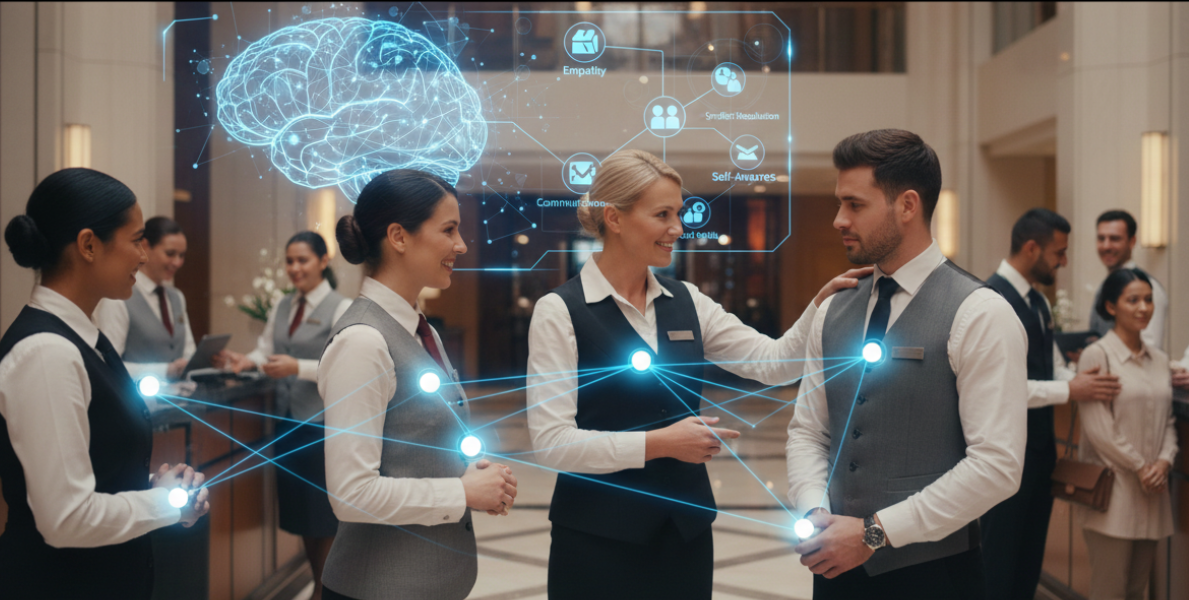
Emotional intelligence (EI) is now a key asset in the hospitality sector, often overshadowing traditional technical skills. Professionals equipped with EI can authentically connect with diverse clientele, enhancing customer satisfaction and loyalty. Additionally, EI fosters strong team dynamics and effectively navigates conflicts, creating a positive work environment. Investing in EI can also markedly boost career advancement. Understanding this shift shows how essential EI has become in today's hospitality landscape, revealing deeper insights and implications.
The Shift From Technical Skills to Emotional Intelligence
As the hospitality industry evolves, it becomes increasingly clear that emotional intelligence (EI) is now as essential as technical skills. Traditional competencies, while still valuable, are being overshadowed by the need for employees who can connect authentically with diverse clientele. The modern landscape demands that hospitality professionals not only manage operational tasks but also foster meaningful interactions, adapting to guests' emotional states and preferences. This shift emphasizes the importance of empathy, active listening, and interpersonal skills, which enhance team dynamics and customer satisfaction. Forward-thinking organizations recognize that cultivating EI in their workforce leads to innovative solutions and a more resilient business model. As a result, the integration of emotional intelligence training is becoming a pivotal strategy for success in an increasingly competitive marketplace. If you are considering an international hospitality course, a focus on EI will be key to your success.
The Role of Emotional Intelligence in Customer Experience
While technical skills remain important, the integration of emotional intelligence into customer experience is becoming a defining factor for success in the hospitality industry. Establishing genuine connections with guests not only enhances satisfaction but also fosters loyalty. Emotional intelligence empowers hospitality professionals to read customers' emotions, adapt to their needs, and respond effectively, creating memorable experiences. By cultivating empathy, active listening, and self-regulation, staff can anticipate guest desires, transforming ordinary interactions into extraordinary ones. In an increasingly competitive landscape, organizations that prioritize emotional intelligence in their service approach distinguish themselves, driving innovation and setting new standards in customer engagement. Ultimately, a heightened focus on emotional intelligence will reshape the future of hospitality, elevating both service quality and guest experiences.
Building Stronger Teams Through Soft Skills
The integration of soft skills, particularly emotional intelligence, extends beyond enhancing customer interactions ; it also plays an essential role in building stronger teams within the hospitality sector. By fostering a culture of empathy, open communication, and collaborative problem-solving, organizations can enhance team cohesion and performance. Emotional intelligence encourages team members to understand and manage their emotions, leading to improved interpersonal relationships and a more supportive work environment. Innovative leaders prioritize soft skill development, facilitating training programs that empower employees to recognize emotional cues and respond constructively. This approach not only cultivates resilience but also enhances overall team dynamics, resulting in a more agile and responsive workforce. Ultimately, investing in emotional intelligence is integral to achieving sustained success in the competitive landscape of hospitality. Students looking at the best culinary arts colleges in guwahati should consider institutions that integrate soft skills into their curriculum.
Navigating Conflict With Emotional Intelligence
Conflict resolution in the hospitality industry demands a nuanced understanding of emotional intelligence. Professionals who excel in this area can assess emotions—both their own and those of others—navigating disputes with empathy and insight. By actively listening and validating perspectives, they create an environment conducive to open dialogue. Emotional intelligence enables them to diffuse tension, transforming conflicts into opportunities for growth and collaboration. Innovative conflict resolution strategies, such as role-playing scenarios or mediation techniques, empower teams to address issues proactively. Ultimately, leveraging emotional intelligence not only fosters a positive workplace culture but also enhances guest experiences, setting organizations apart in a competitive landscape. As the industry evolves, mastering these skills becomes essential for sustainable success.
Cultivating Emotional Intelligence for Career Advancement
Emotional intelligence serves as a pivotal asset not only in managing conflicts but also in advancing careers within the hospitality industry. Professionals who actively cultivate their emotional intelligence can enhance interpersonal relationships, foster team collaboration, and improve guest experiences. By developing self-awareness, individuals can recognize their emotional triggers, leading to more thoughtful decision-making. Empathy allows them to connect authentically with colleagues and clients, facilitating a culture of trust. Furthermore, effective emotional regulation equips them to navigate high-pressure situations adeptly, showcasing resilience and adaptability. Investing in emotional intelligence training can yield substantial returns, positioning individuals as sought-after leaders. In an industry where relationships drive success, those who prioritize emotional intelligence will certainly carve out innovative pathways for career advancement. Choosing from the best colleges for hospitality management in kolkata can be a great step toward a career that values these skills.
Frequently Asked Questions
How Can I Assess My Own Emotional Intelligence?
To assess one's emotional intelligence, an individual can utilize self-reflection and structured assessments. Engaging in introspective practices, such as journaling or meditation, facilitates awareness of emotions and reactions. Additionally, standardized emotional intelligence tests can provide quantitative insights. Seeking feedback from peers and mentors can also enhance self-awareness, revealing blind spots. By combining these approaches, one can gain a thorough understanding of their emotional competencies, fostering personal and professional growth in innovative environments.
What Are Some Common Emotional Intelligence Training Programs?
Emotional intelligence training programs abound, catering to innovative leaders seeking to enhance their interpersonal skills. Common offerings include workshops from organizations like Six Seconds and the Emotional Intelligence Network, which focus on self-awareness, empathy, and relationship management. Online platforms such as Coursera and LinkedIn Learning provide flexible courses on emotional intelligence fundamentals. Additionally, corporate training sessions often integrate role-playing and real-world scenarios to foster practical application and deeper understanding among participants.
How Does Emotional Intelligence Impact Employee Retention Rates?
Emotional intelligence greatly influences employee retention rates by fostering a supportive workplace environment. Employees with high emotional intelligence tend to build stronger relationships, enhancing communication and collaboration. This leads to increased job satisfaction and loyalty. Organizations that prioritize emotional intelligence training often witness lower turnover rates, as employees feel valued and understood. Consequently, fostering emotional intelligence not only boosts morale but also aligns with innovative practices that enhance overall organizational performance and sustainability.
Can Emotional Intelligence Be Measured Quantitatively?
The question of whether emotional intelligence can be measured quantitatively has garnered significant interest. Researchers have developed various assessment tools, such as the Emotional Quotient Inventory (EQ-i) and the Mayer-Salovey-Caruso Emotional Intelligence Test (MSCEIT), which provide numerical scores reflecting an individual's emotional intelligence capabilities. While these metrics offer insights, the complexity of human emotions suggests that quantitative measures may not capture the full depth of emotional intelligence, prompting ongoing debate in the field.
What Industries Benefit Most From Emotional Intelligence Skills?
Industries that prioritize emotional intelligence skills include healthcare, education, and customer service. In healthcare, professionals must empathize with patients, ensuring quality care and communication. Educators benefit by fostering supportive environments that enhance learning. Meanwhile, customer service thrives on emotional intelligence, as employees navigate diverse consumer interactions. These sectors increasingly recognize that understanding and managing emotions can lead to improved outcomes, enhanced collaboration, and innovation, ultimately driving success in their respective fields.