
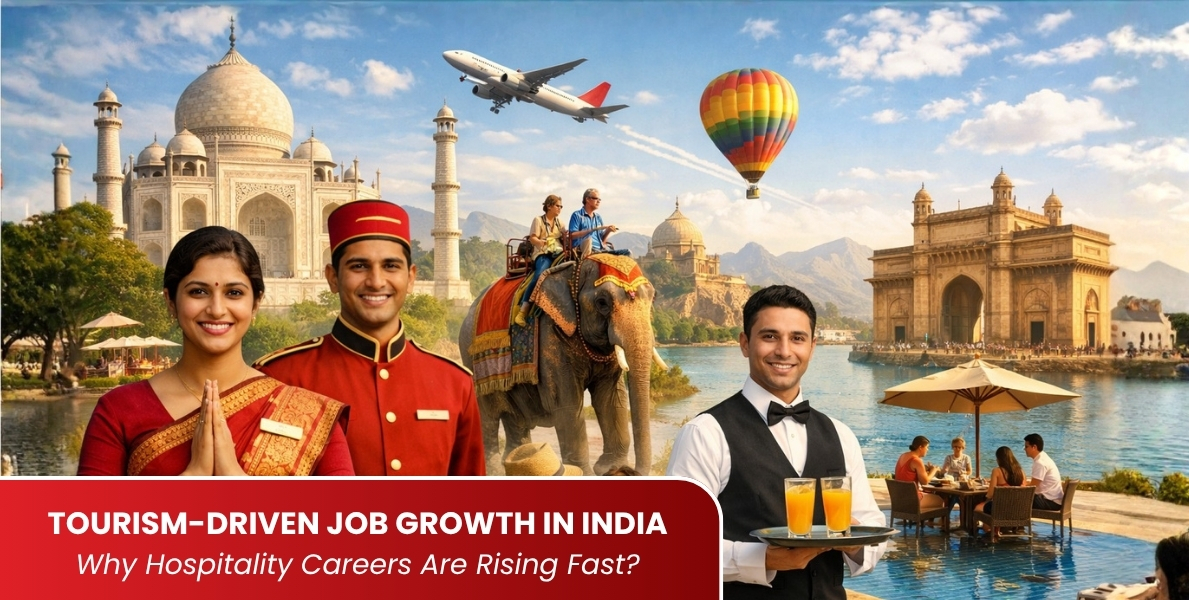
The Indian tourism sector has emerged as a powerhouse of economic stability, contributing approximately 9% to the national GDP as of 2026. This surge is not merely a post-pandemic recovery but a structural shift driven by a burgeoning domestic market and a renewed global interest in India's diverse cultural landscape. From spiritual circuits to high-end wellness retreats, the demand for sophisticated travel experiences has reached an all-time high, creating a fertile ground for professionals who have completed an international hospitality management course. The transformation of India into a global tourism hub is creating a ripple effect across the labor market, making hospitality one of the most resilient and high-growth career paths available today.
The Engine of Growth: Diverse Tourism Segments
The primary reason hospitality careers are rising so rapidly is the diversification of the Indian tourism product. The industry has moved beyond the traditional "Golden Triangle" of Delhi, Agra, and Jaipur to embrace niche segments that require specialized management. The government’s strategic focus on developing 50 top tourist destinations in partnership with states has unlocked economic potential in previously underserved regions, turning hidden gems into global attractions.
We are witnessing a massive spike in "MICE" tourism—Meetings, Incentives, Conferences, and Exhibitions. As India positions itself as a global business hub, the demand for world-class venues and logistical expertise has skyrocketed. This segment requires a highly skilled workforce capable of managing large-scale corporate operations with global standards, blending hospitality with event technology and high-level project management.
Additionally, the rise of Medical Value Travel (MVT) is projected to reach over $13 billion by the end of 2026. India has become a preferred destination for high-quality, affordable healthcare, bringing in thousands of international patients monthly. This niche requires a unique blend of hospitality and healthcare coordination, pushing the boundaries of what a traditional hotelier does. Success in this field involves managing long-term guest stays, dietary requirements, and emotional support, creating a need for empathetic and highly organized professionals.
For those aiming to enter the culinary side of this boom, exploring the best culinary arts colleges in guwahati has become a strategic move. The Northeast region is currently a focal point for heritage and eco-tourism. This expansion demands chefs who are not only technically proficient but are also "food anthropologists"—professionals who can marry local indigenous flavors and sustainable ingredients with international plating standards to satisfy the global palate.
Technology and the "New Age" Hospitality Role
In 2026, the hospitality job market is no longer just about front-office smiles and housekeeping efficiency. The industry is hiring for roles that didn't exist a decade ago, driven by a digital revolution that has changed how guests interact with brands. Modern luxury properties are now "smart hotels," where technology is seamlessly integrated to enhance the human touch rather than replace it.
Digital distribution managers, guest experience designers, and sustainability coordinators are now core to every luxury property's hierarchy. The "silent" integration of AI for personalized guest journeys—from predictive room temperature settings to customized dining recommendations—means that modern hoteliers must be tech-savvy data interpreters. The ability to analyze guest data to provide hyper-personalized service is the new benchmark for luxury.
Educational institutions are adapting to this shift by offering specialized programs that cater to these regional and global demands. Students enrolled in a bsc hotel management course in kolkata are now trained in revenue management analytics, digital marketing, and property management systems alongside traditional service excellence. Kolkata, as a gateway to East India and Southeast Asia, serves as a critical talent hub for luxury brands expanding their footprint into the "Seven Sisters" and neighboring international markets like Bhutan, Nepal, and Thailand.
Impact on Employment and Salaries
The "war for talent" in the hospitality sector has led to a significant improvement in wage structures across the board. With over 68% of employers in the sector planning to expand their workforce this year, the leverage has shifted toward the skilled professional. High attrition rates in the past have forced hotel groups to rethink their employee value proposition, leading to better work-life balance and competitive compensation.
Frontline Excellence: Entry-level roles in luxury chains are seeing higher starting packages than ever before. Management Trainee (MT) programs, in particular, are offering premium salaries to graduates from top-tier institutes, recognizing them as the future leadership pipeline.
Specialized Management: Mid-level managers in niche segments like wellness, sustainability, or revenue management are seeing salary increments of 15–20% annually. As hotels struggle to find talent that understands both the operational and technical sides of the business, these specialists are becoming the highest-paid assets in the building.
Tier-2 Opportunity: Interestingly, much of the growth is happening in cities like Indore, Jaipur, and Bengaluru. These cities offer faster career progression for young professionals. Leading a new property launch in a rising city often provides more responsibility and visibility than working in a saturated metro market, allowing for rapid promotion into senior leadership.
The Rise of Spiritual and Eco-Tourism
A significant contributor to the 1000-word career expansion is the explosion of spiritual and sustainable tourism. The development of corridors like the Kashi Vishwanath and the Ayodhya project has led to a massive requirement for branded hotel inventory in temple towns. These locations are no longer just for budget travelers; luxury brands are moving in to cater to the high-end pilgrim who expects a 5-star experience.
Similarly, eco-tourism and glamping are booming as Gen Z and Millennial travelers prioritize environmental impact. Professionals who understand sustainable architecture, zero-waste kitchen management, and community-based tourism are in high demand. This shift ensures that hospitality careers are not just commercially viable but also socially responsible, attracting a new generation of purpose-driven workers.
Future Outlook
The World Travel and Tourism Council (WTTC) projects that the sector will support nearly 64 million jobs in India by 2035. As connectivity improves through the RCS-UDAN scheme and new airport infrastructure, the barriers to travel are falling. Remote locations that were once inaccessible are now becoming weekend getaway spots, requiring professional management and standardized service. This accessibility ensures that the hospitality industry remains one of the most resilient and fastest-growing career paths in the country.
Furthermore, the rise of the "Silver Economy"—travel for senior citizens—is creating a demand for specialized hospitality services that prioritize accessibility, health monitoring, and slow-paced leisure. This demographic has high spending power and seeks high-touch service, further cementing the need for a well-trained, empathetic workforce.
Conclusion
Tourism-driven job growth is a long-term reality for India. The shift from transactional service to experiential storytelling means that the modern hospitality professional is an architect of memories. The industry has matured into a sophisticated ecosystem where business strategy, technological innovation, and cultural heritage intersect.
Whether you are specializing in the culinary arts in the Northeast, managing large-scale MICE operations in a metro, or leading a sustainable resort in the Himalayas, the opportunities are vast. The key to succeeding in this fast-rising field is a commitment to continuous learning and an understanding that in 2026, hospitality is as much a tech-driven business as it is a human-centric art. For the aspiring hotelier, the horizon has never been broader, and the potential for a lucrative, global career has never been more certain.