
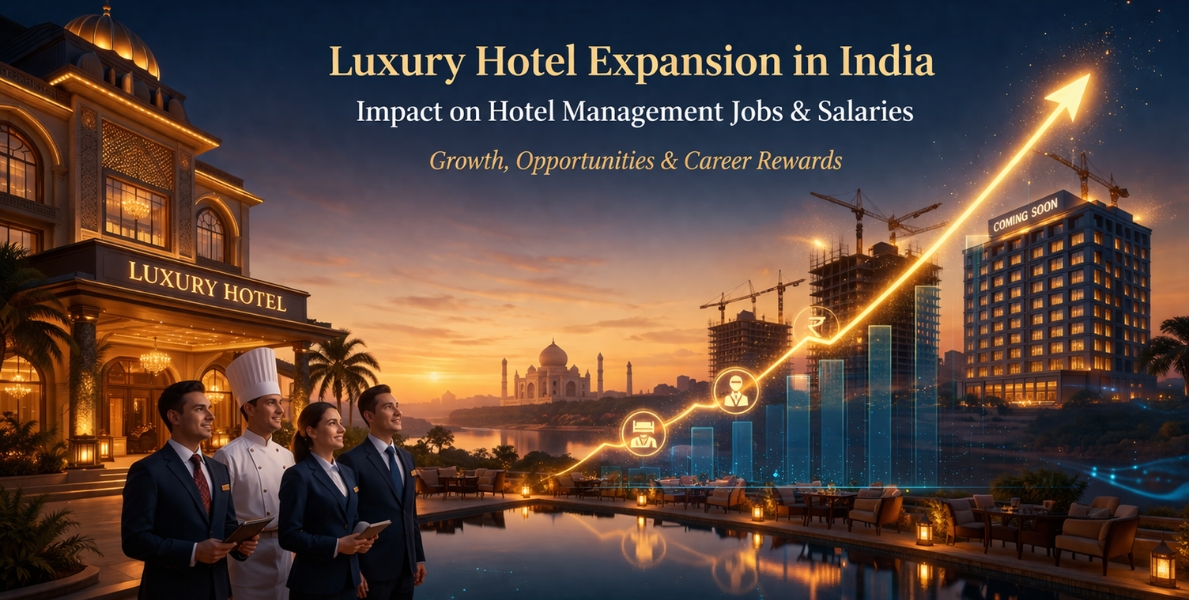
The Indian hospitality landscape is currently undergoing a structural transformation. As of 2026, the sector has moved beyond a phase of mere recovery into one of sustained, aggressive growth. This evolution is most visible in the luxury segment, where a significant demand-supply mismatch is driving both massive capital investment and a radical reimagining of the hospitality workforce. For students pursuing a bachelor degree in hotel management, this expansion represents a pivot point—one where traditional service roles are being replaced by high-stakes leadership and specialized expertise.
The Catalyst: Why Luxury is Leading the Charge
The surge in India’s luxury hotel inventory is fueled by a "Golden Age" of domestic travel. While international tourism remains a vital pillar, the current boom is largely powered by rising disposable incomes among the domestic middle and upper classes, a surge in ultra-high-net-worth individuals, and a fundamental shift in the Indian traveler’s mindset. Travelers are no longer just looking for a room; they are looking for an identity and a narrative.
Major global and domestic players are rapidly expanding their footprints not just in metros, but into Tier-2 and Tier-3 cities. This geographical diversification is a response to the rise of Global Capability Centers and the burgeoning wedding and corporate event economy. Many aspirants looking for the best hospitality management colleges in kolkata are finding that the industry now demands a deeper understanding of "purposeful luxury"—a blend of heritage, modern wellness, and high-tech sustainability that guests now expect as a standard. The expansion into cities like Chandigarh, Nagpur, and Kochi means that the luxury experience is becoming localized, requiring managers who understand regional nuances while maintaining international standards.
The Job Market: Quality Over Quantity
The expansion of luxury brands has triggered an unprecedented hunt for talent, but the requirements have evolved significantly. In 2026, luxury hotels are no longer looking for staff; they are looking for experience curators who can navigate a digital-first guest journey. The sheer volume of new properties opening—estimated at over 15,000 luxury keys annually—has created a vacuum at the mid-to-senior management levels.
1. The Rise of Specialized Niche Roles Traditional hotel departments are being supplemented by roles that require specific technical training. Beyond general management, there is a massive surge in demand for specialized skill sets. For instance, those who have completed a diploma in housekeeping management in guwahati or similar regional hubs are finding that their roles now involve sophisticated environmental audits and the management of high-end automated cleaning technologies that were once rare in the Indian market. We are also seeing the emergence of "Chief Sustainability Officers" and "Well-being Concierges" within individual properties, reflecting the guest's desire for ethical and healthy living even while traveling.
2. The Premium on Emotional Intelligence Technical proficiency—knowing how to manage a Property Management System or execute a perfect table setting—is now considered a baseline requirement. In the luxury tier, the real competitive advantage lies in soft skills. Recruiters are prioritizing candidates who demonstrate high emotional intelligence, cultural sensitivity, and the ability to solve complex problems with silent efficiency. The ability to anticipate a guest's needs before they are voiced is the hallmark of modern luxury, and this requires a psychological depth that traditional training often overlooked.
Impact on Salaries: The Upward Trajectory
The most tangible impact of this expansion is the upward pressure on compensation. To attract and retain top-tier talent in a competitive market, luxury brands have significantly revamped their wage structures to prevent talent drain to other service sectors like luxury retail, private aviation, and high-end real estate.
Entry-Level Trainees: Graduates entering Management Trainee programs at top luxury brands can now expect starting packages ranging from ₹4.5 lakh to ₹7 lakh per annum. This reflects the industry's need to compete with other corporate sectors for high-quality graduates who have been trained at top-tier institutions. These programs are often viewed as "fast-track" routes, where the investment in the employee is high, with the expectation that they will take on supervisory roles within 18 months.
Mid-Level Management: Professionals with 5 to 8 years of experience in departments like Revenue Management, Sales, or Front Office Operations are seeing salaries touch the ₹12 lakh to ₹18 lakh bracket. This demographic is currently the most "in-demand" as they possess the operational experience required to run the day-to-day business of new luxury launches.
Senior Leadership: The role of a General Manager at a flagship luxury property has become a high-value corporate position. Compensation for these roles often starts at ₹35 lakh and can exceed ₹60 lakh per annum, often supplemented by performance-linked bonuses, stock options in listed hotel groups, and international perks. These leaders are expected to manage the hotel not just as a service outlet, but as a multi-million dollar asset.
Future-Proofing for the New Era
To capitalize on this boom, the next generation of hospitality leaders must look beyond the standard curriculum. The industry in 2026 values tech-human hybrids—professionals who are as comfortable with AI-driven revenue tools as they are with high-touch guest relations. Understanding data analytics is now just as important as understanding wine pairings.
Furthermore, the expansion into Tier-2 cities offers a unique strategic advantage for early-career growth. These emerging markets often provide faster promotion cycles and a broader range of responsibilities compared to the saturated metro markets. In a Tier-2 luxury property, a young manager might oversee multiple functions, allowing them to move into leadership roles much earlier than previous generations. This "accelerated leadership" is the new norm in Indian hospitality.
The Role of Specialized Education
As the industry becomes more complex, the value of specialized education cannot be overstated. Standard degrees are being supplemented by micro-credentials in areas like Digital Marketing for Hotels, Sustainable Tourism, and Luxury Brand Management. Institutions are now partnering directly with hotel chains to create bespoke curricula that ensure graduates are "floor-ready" from day one. This synergy between academia and industry is what will sustain the current growth trajectory.
Conclusion
The luxury hotel expansion in India is more than just a real estate story; it is a professional revolution. For the dedicated hotel management student, the current market offers a rare combination of high demand, diverse specialized roles, and competitive global-standard salaries. We are moving toward a future where "Indian Hospitality" is a global benchmark for excellence.
Success in this new era requires a mindset shift: seeing hospitality not just as a service industry, but as a strategic business sector where the product is a seamlessly delivered, personalized human experience. For those ready to embrace technology while maintaining the warmth of traditional Indian service, the opportunities are limitless. The ladder from the lobby to the boardroom has never been more accessible or more lucrative.