
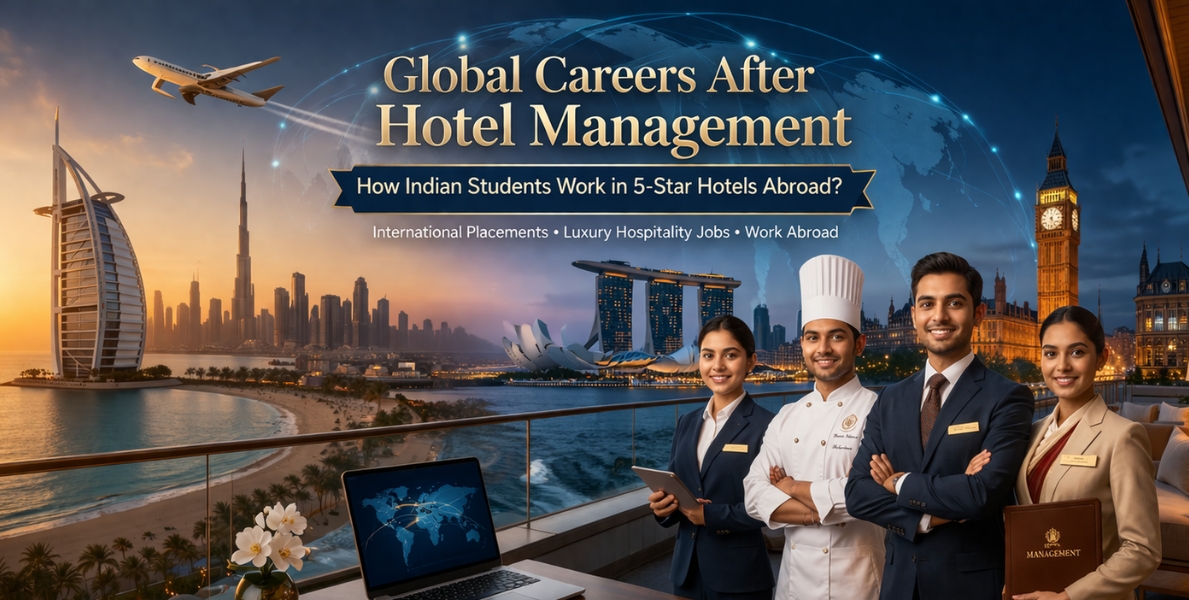
The dream of working in a glittering 5-star hotel in Dubai, London, or New York is a driving force for thousands of hospitality aspirants in India. As of 2026, the global hospitality industry is facing a significant talent shortage, particularly in developed economies, opening a massive window of opportunity for Indian graduates. The journey from a classroom in India to a luxury suite abroad is a structured path involving specialized training, international certifications, and strategic networking. Indian professionals are increasingly recognized for their strong work ethic, linguistic abilities, and the innate cultural philosophy of "Atithi Devo Bhava," making them the preferred choice for international luxury chains.
The Foundation: Choosing the Right Starting Point
The transition to a global career begins with a solid educational foundation that aligns with international standards. Most luxury chains abroad—such as Ritz-Carlton, Four Seasons, and Aman Resorts—look for candidates who possess a sophisticated blend of technical "hard" skills and refined "soft" skills. The global market in 2026 demands more than just service; it demands emotional intelligence and cross-cultural competence.
For many, starting with a diploma in hotel management is the fastest way to gain the vocational skills required for entry-level roles in international markets. These programs focus heavily on the core pillars: Front Office, Food & Beverage Service, Housekeeping, and Culinary Arts. However, in a competitive global landscape, the prestige and placement record of the institution matter immensely. Students graduating from the best hospitality colleges in kolkata often have an edge because these hubs are frequently visited by international recruitment agencies and human resource directors from the Middle East and Southeast Asia looking for fresh talent to fill their pipelines.
The Pathway: Internships and Visa Navigation
Working abroad isn't just about applying for a job; it is about navigating the complex landscape of visas, work permits, and cultural exchange programs. Successful Indian students often use a "step-ladder" approach to global mobility.
1. International Internships: Many Indian students utilize their third year of study to pursue internships in countries like France, Mauritius, or Thailand. These "industrial exposures" serve as a vital bridge, allowing students to understand global guest expectations and cultural nuances while still in a learning environment. An internship at a 5-star property in Paris or Bangkok carries immense weight on a CV when applying for full-time roles later.
2. Cultural Exchange Programs (The J-1 Route): For the United States, the J-1 Intern or Trainee visa remains a highly popular route. It allows hospitality students and recent graduates to work in US-based 5-star properties for up to 12 months. This program provides invaluable "Western" service experience and exposure to American management styles, which makes a resume stand out globally. Many J-1 participants return to India only to be immediately scouted for senior roles or move on to 5-star opportunities in Europe.
3. The Middle East Corridor: Countries like the UAE, Qatar, and Saudi Arabia remain the largest recruiters of Indian hospitality talent. Saudi Arabia, in particular, is undergoing a massive transformation driven by its "Vision 2030" tourism expansion, creating a demand for thousands of skilled managers. These regions often offer tax-free salaries, free accommodation, and a direct path to supervisory roles within 12 to 24 months of joining.
Diversifying Beyond Traditional Hotel Roles
The global market in 2026 is no longer restricted to just "hotels." The skill set of a hospitality professional is now considered a high-value "transferable" asset. Indian students are finding that their training in luxury service is a passport to various high-end sectors:
Key Success Factors for an International Career
To secure and sustain a 5-star role abroad, Indian students must focus on several critical areas that go beyond the basic curriculum:
Digital Literacy and AI Integration: Modern 5-star hotels abroad are heavily reliant on technology. Proficiency in modern Property Management Systems (PMS) like Opera Cloud and familiarity with AI-driven guest relations tools are now mandatory for any candidate looking at mid-management roles.
The Financial and Professional Rewards
The motivation for working abroad is often both financial and professional. An entry-level waiter or front desk associate in a 5-star hotel in Dubai can earn three to four times the starting salary of a similar role in India, with the added benefit of international exposure. Professionally, working in a global hub allows Indian students to build a massive network of international colleagues, which often leads to "internal transfers" within global chains. A professional might start in Dubai, move to London after two years, and eventually settle in a senior leadership role in Singapore.
Conclusion
A global career after hotel management is more attainable in 2026 than ever before. The world is looking for the unique combination of technical skill and genuine hospitality that Indian students provide. With the right training from a reputable institution and a clear understanding of international visa pathways, Indian graduates are successfully positioning themselves as the backbone of the global luxury service industry. Whether it is managing a high-stakes rooftop bar in Singapore, a heritage hotel in London, or a boutique wellness resort in the Swiss Alps, the world is quite literally the limit for those with the right hospitality pedigree and a global mindset.